Deadpan or Animated: Two Routes to Comic Character
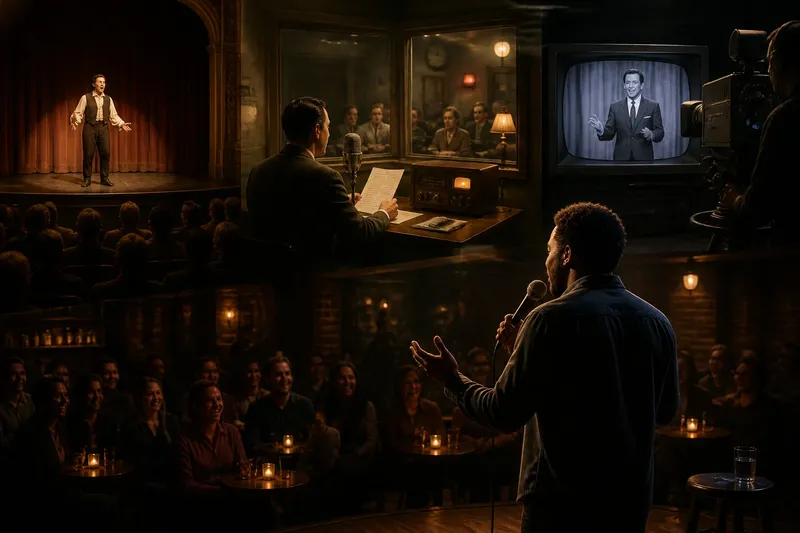
Deadpan or animated comic character choices shape what audiences watch, from a still face and clipped gesture to movement that fills the room.
The most common mistake in choosing a comic character style is treating deadpan as “doing nothing” and animation as “doing everything.” That flattens both choices: a still performer can lose the audience if nothing changes, while a highly expressive one can bury the character beneath constant activity. Deadpan or animated comic character work is more useful to think of as a choice about where the audience should place its attention.
A restrained character makes small deviations feel significant: a delayed glance, a careful adjustment of a sleeve, a voice that remains level while the situation grows stranger. An animated character makes shifts visible through the whole body, from a quick turn to a change in posture or vocal energy. Neither approach is inherently funnier. Each creates a different relationship between character, audience, and scene.
What makes a comic character deadpan?
A deadpan character presents unusual circumstances with an unusually steady exterior. The performance may be quiet, formal, or emotionally contained, but it still needs a point of view. The character could be determined to preserve etiquette, intent on finishing a task, or convinced that everyone else is being unreasonable.
The useful distinction is between a controlled response and an absent one. A performer can keep the face neutral while allowing the eyes to track a disruption. They can hold a posture as a chair squeaks, then make one precise adjustment. Those small choices show that the character registers the world; the comedy comes from the gap between what is happening and how the character chooses to meet it.
Deadpan also depends on legibility. If the audience cannot tell what the character wants or notices, restraint may read as blankness. Give the character a clear objective and let the stillness become a strategy for pursuing it.
What makes an animated character funny?
An animated character lets reaction travel visibly through the body and voice. A thought might change the character’s stance, alter their pace, or spill into a more emphatic vocal register. The comedy can come from the scale, timing, or direction of those changes, not simply from their size.
Strong animation is selective. A performer might be quick with their hands but deliberate in speech, or speak rapidly while keeping a rigid posture. That contrast gives the audience a pattern to notice. If every line receives the same broad reaction, the character has no room to surprise the audience or reveal a new facet.
Think of animation as a readable physical vocabulary. A character who smooths their shirt whenever they feel challenged has a repeatable behavior. When the shirt is already smooth, the performer must find another response; that change can expose the character’s rising frustration without requiring a new joke.
How do deadpan and animated styles direct attention?
Deadpan often asks the audience to inspect a small detail. A held expression, a restrained voice, or a slight change in gaze can become the focus. The audience watches for what slips through the character’s self-control, and the performer needs to make those details visible without underlining them.
Animation tends to direct attention toward movement, scale, and contrast. A turn, a sudden shift in vocal intensity, or a body that folds around an awkward problem can make the character’s reaction the main event. This approach can feel especially immediate in a large room, where a clean physical choice may read more clearly than a subtle facial change.
These are tendencies, not rules. A deadpan character can make a large physical move, and an animated character can become still. The important question is whether the change feels like the character’s behavior or like the performer switching modes to chase a laugh.
Which style suits a character’s situation?
Start with what the character believes they are doing. Someone trying to maintain authority may hide their alarm behind formal manners; someone who treats every inconvenience as a personal emergency may display each reaction openly. The situation matters, but the character’s coping habit gives the performance its shape.
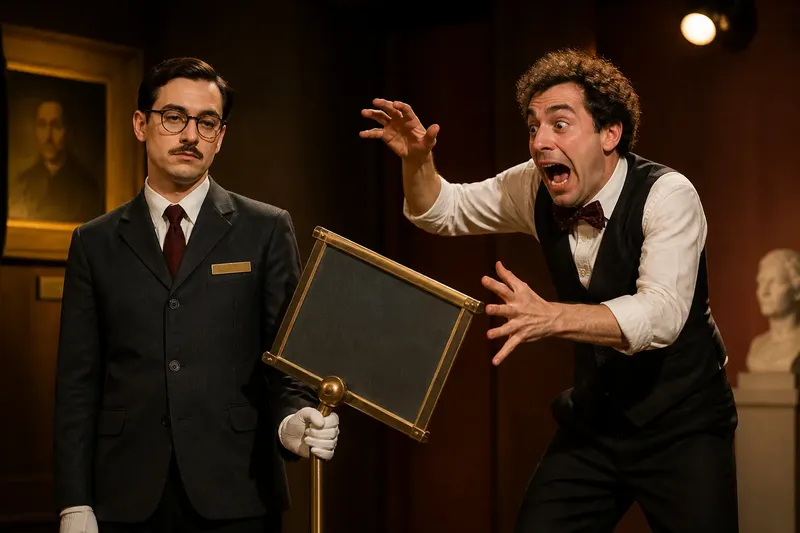
Say you are playing a museum attendant whose sign keeps falling from its stand. If the character values order above all, you might keep your voice composed, reset the sign with painstaking care, and let one tightening hand reveal irritation. If the character sees the falling sign as an escalating insult, you might react with broader gestures and increasingly elaborate attempts to steady it. Both choices serve the same situation; they invite the audience to watch different aspects of the character.
For a scripted role, use the dialogue and stage directions as evidence, then make choices that fit the character’s circumstances. In improvisation, establish the behavior early enough for scene partners to respond. A clear pattern gives other performers something to play with, while a pattern that changes for a reason can carry the scene into a new state.
How can performers choose and refine a comic style?
Try the scene with a specific behavior in mind rather than a general instruction such as “be funny.” For a restrained pass, choose one objective and one visible sign of pressure. For an animated pass, choose a physical or vocal quality that can vary, then reserve some range for moments when the character’s control changes.
When reviewing rehearsal footage, watch for whether the character remains understandable when the dialogue is not the focus. Notice what the eyes, hands, posture, and voice communicate. If a gesture appears often, ask whether it belongs to the character or has become a habitual signal from the performer.
It can also help to rehearse at different levels of expression. Reduce a broad reaction until its intention remains clear, or let a restrained moment expand until the audience can read it from the back of the room. The goal is not to settle on the biggest or smallest version, but to find a scale that preserves the character’s logic in the performance space.
What questions help distinguish the two approaches?
Is deadpan the same as having no facial expression?
No. Deadpan keeps expression controlled, but the performer can still use gaze, posture, and small changes in tension to show attention. The audience should be able to sense a mind at work beneath the calm surface.
Does animated comedy mean exaggerated acting?
Not necessarily. Animation means that reactions are visibly expressed, but their size should fit the character and the room. A quick breath or a sudden shift of weight can be more effective than a large gesture if it clearly changes the character’s behavior.
Can one character use both styles?
Yes, when the shift follows a change in the character rather than a wish to vary the performance. A composed character might finally lose control, or an expressive character might go quiet when something matters more than expected. Make the transition readable so the audience can follow what has changed.
How do I know if the style is reaching the audience?
Ask a director, scene partner, or trusted audience member what they noticed about the character, not just whether they laughed. If they can describe the character’s objective and behavior, the style is communicating; if they only recall a repeated mannerism, refine the choices that reveal the character’s point of view.
Why should comic character choices stay flexible?
A performance style is a tool, not a permanent label. The same character can be restrained in public and expressive in private, or maintain a calm voice while the body betrays impatience. Those distinctions make the character more specific without requiring a change in the basic comic premise.
For deadpan or animated comic character work, keep returning to the question of attention: what should the audience notice about this person right now? A small lapse, a carefully managed pose, or an outsized reaction can each answer that question. Choose the behavior that makes the character’s way of seeing the situation easiest to read, then let the scene provide reasons for that behavior to shift.