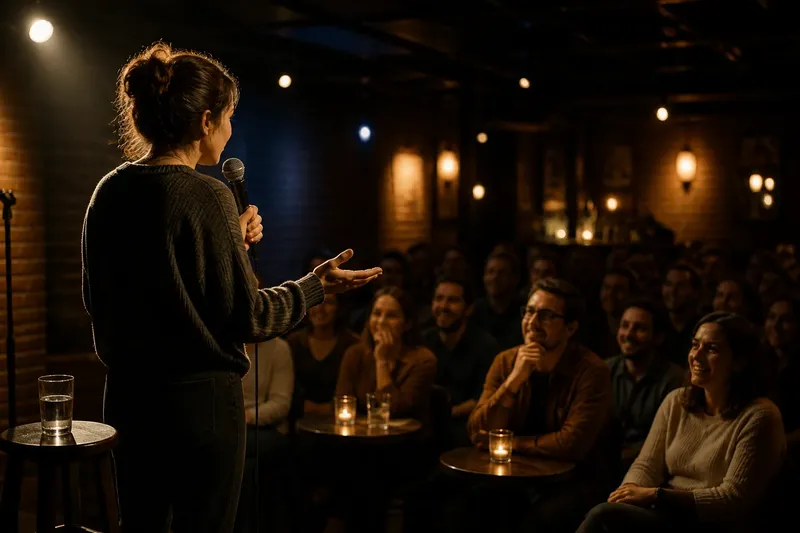
The Quiet Beat Before a Punchline
The quiet beat before a punchline can sharpen anticipation or flatten a joke. Learn three timing approaches and choose one that fits your delivery.
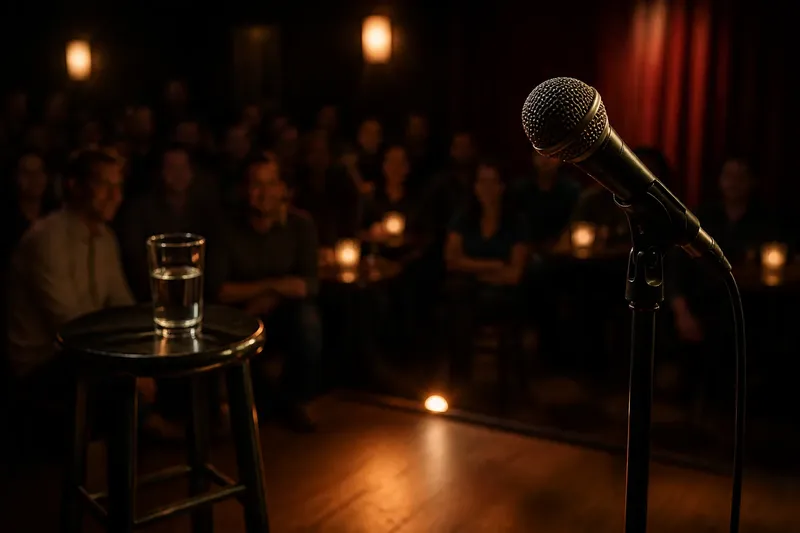
The most common mistake with a quiet beat before a punchline is treating silence as a button you can press on every joke. That can make a room wait for a laugh that never arrives, while the punchline loses its snap. A pause works when it changes what the audience expects, not simply when it makes the delivery slower.
In spoken comedy, timing is a relationship among the setup, the performer’s breath, and the audience’s attention. The words supply the idea; the beat shapes the instant before the audience hears its turn. Three approaches are useful to distinguish: a quick hinge, a held pause, and a pause that grows out of a character’s behavior.
A quick hinge keeps the joke moving
A quick hinge is a small gap between the setup and the punchline. It is long enough to separate the two thoughts, but not long enough to invite the audience to settle into a separate moment. The listener registers a shift in direction, then receives the line while still following the same train of thought.
This approach suits fast-moving material, conversational delivery, and punchlines whose surprise depends on a sudden turn. It can also help when the setup already contains enough detail to orient the audience. A large pause in that situation may telegraph that a punchline is coming and soften the surprise.
Keep the hinge in the rhythm of the sentence. A performer might finish the setup, take a light breath, and continue without changing stance or gaze. The breath marks a boundary, not a performance of suspense. If the audience begins laughing at the setup, leave room for that response before continuing; don’t force the punchline over it.
A held pause lets anticipation gather
A held pause gives the audience time to form an expectation. It suits a punchline that turns on a reversal, a reveal, or a contrast the listener needs to picture. The delay can make the audience mentally complete one likely thought before the performer supplies another.
The risk is making the pause announce its own importance. A fixed stare, an exaggerated inhale, or a rigid count can signal “laugh now” before the joke has earned that response. Instead, give the moment a reason: let the performer search for a word, inspect an object, or wait for a reaction that matters within the scene. The audience can then follow an action rather than watch a clock.
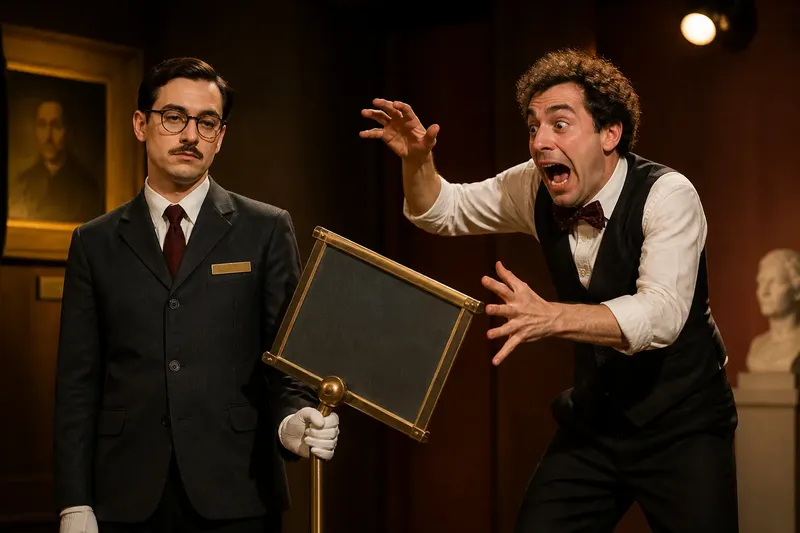
Imagine a performer telling a story about arriving at a dinner with a covered dish, then noticing that every guest brought the same dish. If the performer glances at the table before naming the dish, that brief look gives listeners time to notice the repetition and anticipate the reveal. The punchline can then land as recognition, rather than as a line announced by a long, empty pause.
A character pause makes silence part of the scene
Some pauses belong less to the joke’s sentence than to the person saying it. A character may hesitate because they are trying to appear composed, deciding whether to confess something, or waiting for approval. That behavior gives the silence an emotional or social purpose, while the audience senses the comic pressure underneath it.
This approach suits character-driven material and scenes with a clear relationship between speakers. It is especially useful when the character’s effort to manage a situation is funny in its own right. The pause need not be long: a swallowed response, a glance toward a companion, or an attempt to recover a polite smile can carry more meaning than a deliberate stretch of silence.
Keep the behavior specific and readable. If the character looks away, the audience should have some reason to understand what the look means in the scene. Otherwise, the pause can seem like a forgotten line. The performer’s task is not to decorate the silence but to keep the character’s intention active during it.
How should you choose a pause for a punchline?
How long should a comedic pause last?
There is no useful fixed duration for every joke. Let the pause last only as long as the audience needs to register the setup, follow the character’s action, or anticipate the turn.
Should you pause after the audience laughs?
Yes, when laughter covers the next line or would make it hard to hear. Wait for the response to ease, then continue at a pace that keeps the scene intelligible rather than racing to reclaim attention.
How can you tell if a pause is too long?
Notice whether the silence still has a clear job. If the audience’s attention drifts, the performer’s intention becomes unreadable, or the joke’s turn feels obvious well before it arrives, shorten the beat or give it a specific action.
Should every punchline have a pause before it?
No. A pause is one timing choice, not a requirement. Some jokes are stronger when the punchline interrupts the expected rhythm or follows the setup immediately.
Choose by listening to the room and the line
When deciding which approach to use, ask what the audience needs at that exact point. If the setup is clear and the joke depends on speed, try a quick hinge. If a reversal needs time to form in the listener’s mind, try a held pause. If the humor comes from what the speaker is trying not to reveal, let the character’s behavior shape the beat.
Practice the same line in all three ways, but change only the timing. Keep the words, volume, and physical movement as steady as you can; otherwise, it becomes difficult to tell which choice changed the effect. A phone recording can help you hear whether a pause sounds purposeful, while a rehearsal partner can tell you where the thought became clear. Treat both as prompts for adjustment, not verdicts about how every audience will respond.
Pay attention to the room without chasing every laugh. A small audience response may mean the punchline was heard but did not call for a large reaction; laughter that begins before the line may mean the setup already carries the joke. Adjust the next delivery only when you can name what the pause should accomplish. The quiet beat before a punchline earns its place when it gives the audience something to do: follow a thought, anticipate a turn, or watch a character try to hold it together.